




Third Space
TAK Contemporary
The exhibition takes its title from the Hindi-Urdu phrase baagh-bageecha, bringing together two related words for a garden. Baagh refers to a larger garden, orchard, or grove, often a shared community space, while bageecha describes a smaller garden or cultivated patch of land within the home. Together, they evoke an inhabited, cared-for space shaped by everyday rituals and accumulated memories.
The exhibition explores cultivated nature through everyday life: a tree behind the house, the soil of a field, a courtyard, a fountain, or a place remembered from childhood. These spaces hold distinct experiences: the baagh, where children play, agricultural work unfolds, and local festivities take place; and the bageecha, where morning chai is shared, hair is cut, and grains are dried.
BAAGH BAGHEECHA explores the entanglements of memory, labour, and belonging. The garden is a familiar space of comfort, a place to retreat, grow, play, remember, and rest. Yet it is also constructed and fragile. The garden emerges not as an inherently secure or autonomous space, but as a site that remains vulnerable to the environmental, social, and political forces that surround it.
Info
21 Rue Béranger, 75003 Paris
takcontemporary.com
For inquiries:
Damini Kulkarni
contact@takcontemporary.com
+33667036191
Exhibited artists
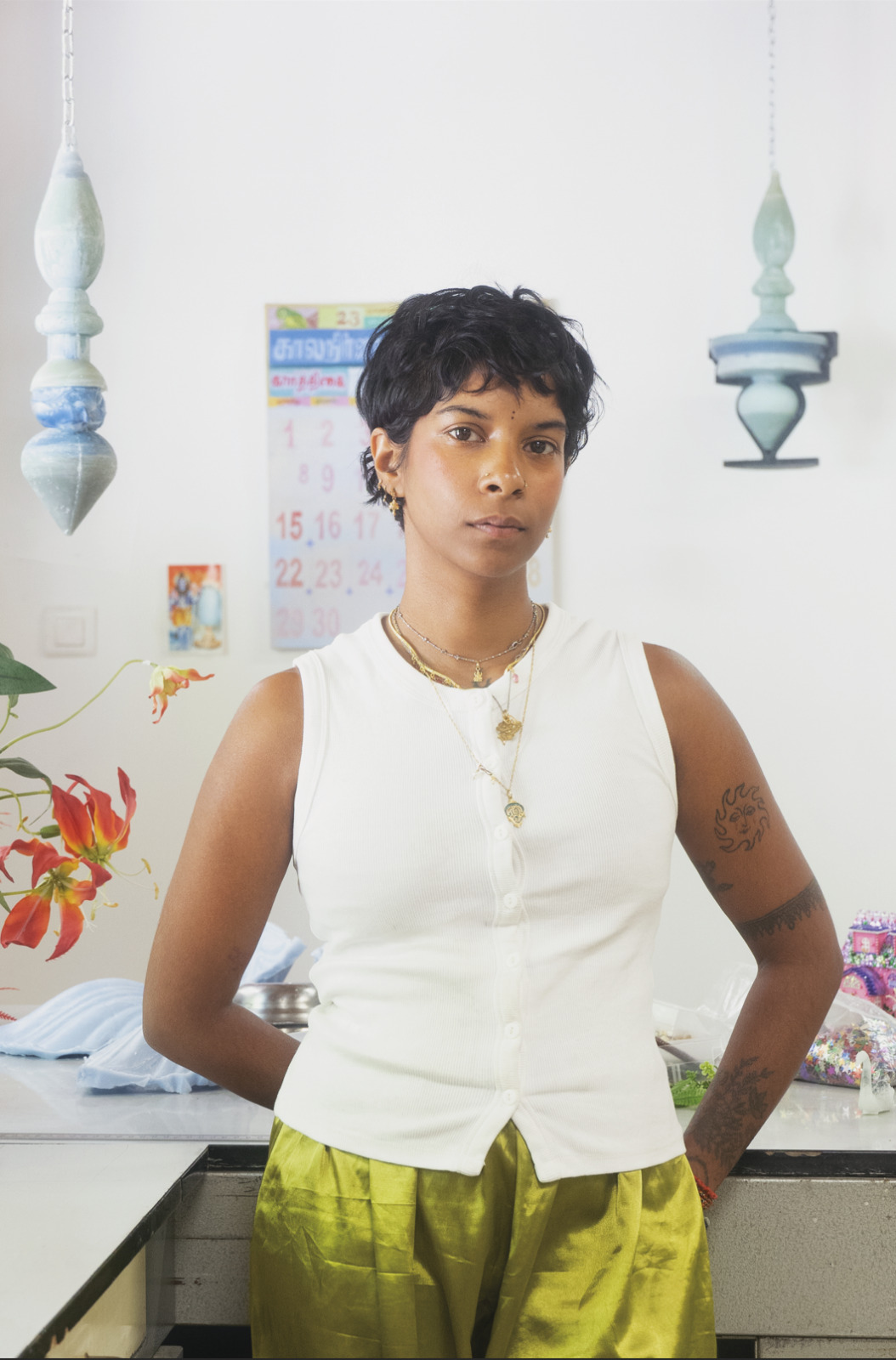
Abirami
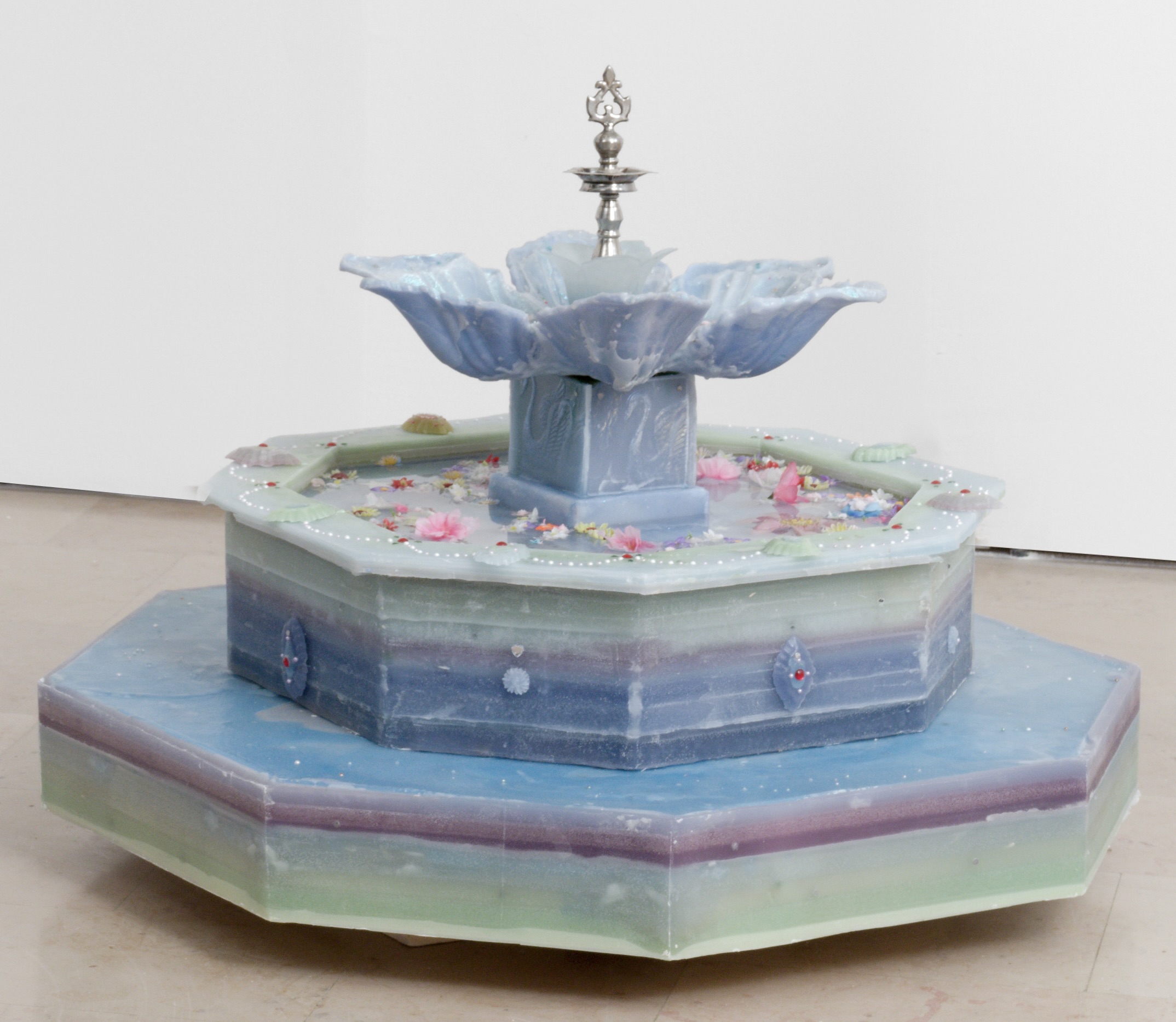
Abirami (1993) is a multidisciplinary artist whose practice explores the Tamil diaspora, collective memory and the experience of displacement. Drawing on colonial history and the intergenerational trauma of Sri Lankan Tamils’ genocide, her work also revisits childhood memories, family objects and suburban life, bringing together personal and collective narratives. Working across sculpture, painting, video and mixed media, she is particularly known for sculptural installations made from melted wax, into which she embeds beads, rhinestones, plastic charms and dried flowers. These shrine-like works bring together domestic imagery, Hindu iconography and pop culture, creating intimate spaces that function as personal altars of memory.
Abirami was born in France in 1993 and grew up in the Val d’Argent housing project near Paris. She studied architecture at ENSA Versailles (2019) and initially worked on urban housing and hygiene projects . Her architectural training continues to inform her artistic practice, with her sculptures often conceived as miniature “houses” or spaces that can be spiritually inhabited.
Abirami has participated in exhibitions including L’Amour et la Violence at MPAA Bréguet, Paris, Dog Days in Marseille (2025), curated by Brontë Scott, and Pivoines at Gallery SPF 50 (2025), curated by David Pons. In 2026, she was selected for the Salon de Montrouge at the Beffroi de Montrouge. Her work was featured in Revue CENSORED #10 (2025), and she has been a member of the collective SOUAG (South Asian Gang) and Faire Avec since 2024.
Lakshya Bhargava
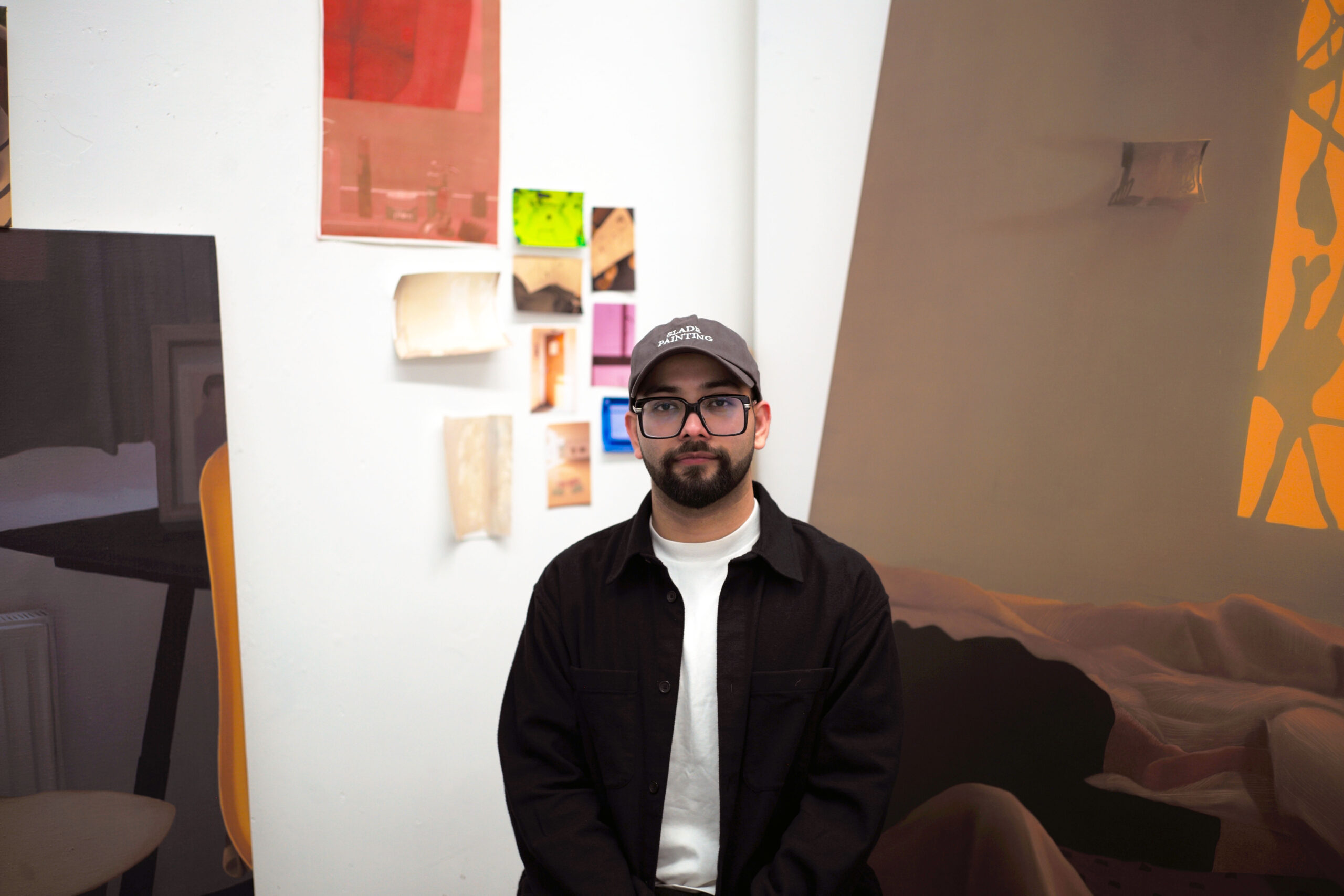
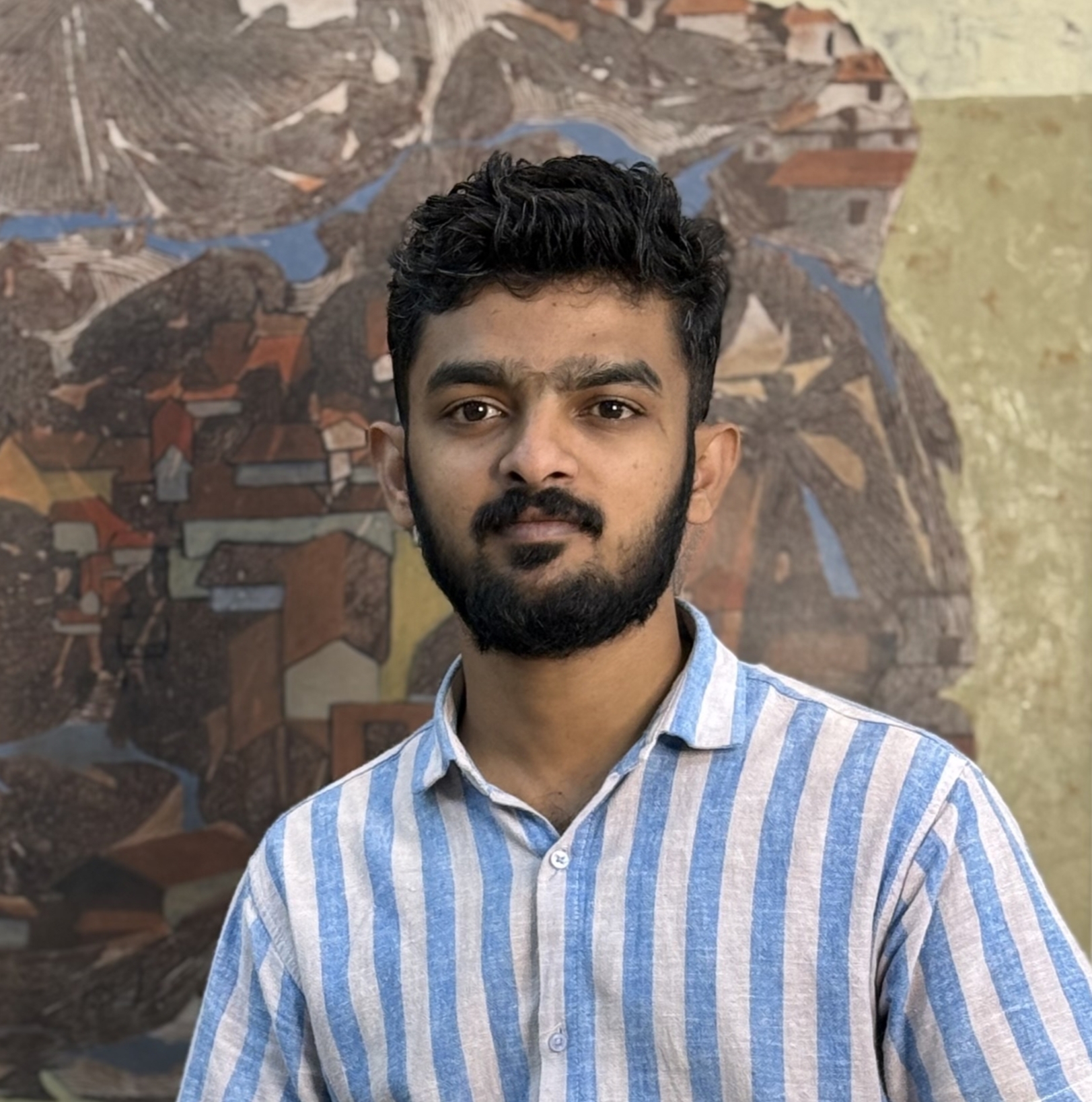
Lakshya Bhargava (2000) is a visual artist whose practice is rooted in painting and explores themes of care, love, intimacy and the search for home. Drawing from personal memories, lived experiences and relationships with those close to him, he transforms intimate moments into spaces of comfort, tenderness and gratitude. His works are often driven by observation and memory, and shaped by a desire for home, friendship and belonging. He sees his paintings “as a place for romance and, ultimately, a way of learning how to love.”
Bhargava was born in India in 2000 and is currently based in London. He studied painting at the Bengaluru School of Visual Arts and is pursuing an MFA at the Slade School of Fine Art, University College London (UCL). His practice draws on the personal as a means of reflecting on wider questions of identity, community and the experience of finding a place to call home.
Lakshya Bhargava’s exhibitions include Students’ Biennale at the Kochi-Muziris Biennale (2022–23); Out of Turn at MAG Contemporary, New Delhi (2024); and To Make Home With You at Art & Charlie, Mumbai (2025). His work was also presented at Seattle Art Fair and Art Mumbai with Gallery Sumukha in 2025. In 2026, he was selected for New Contemporaries, exhibiting at South London Gallery and MIMA, Middlesbrough. His practice has been recognised through the Tata Trusts Award, which he received in 2022, and the Elizabeth Greenshields Grant in 2024.
Sudhakar Chippa
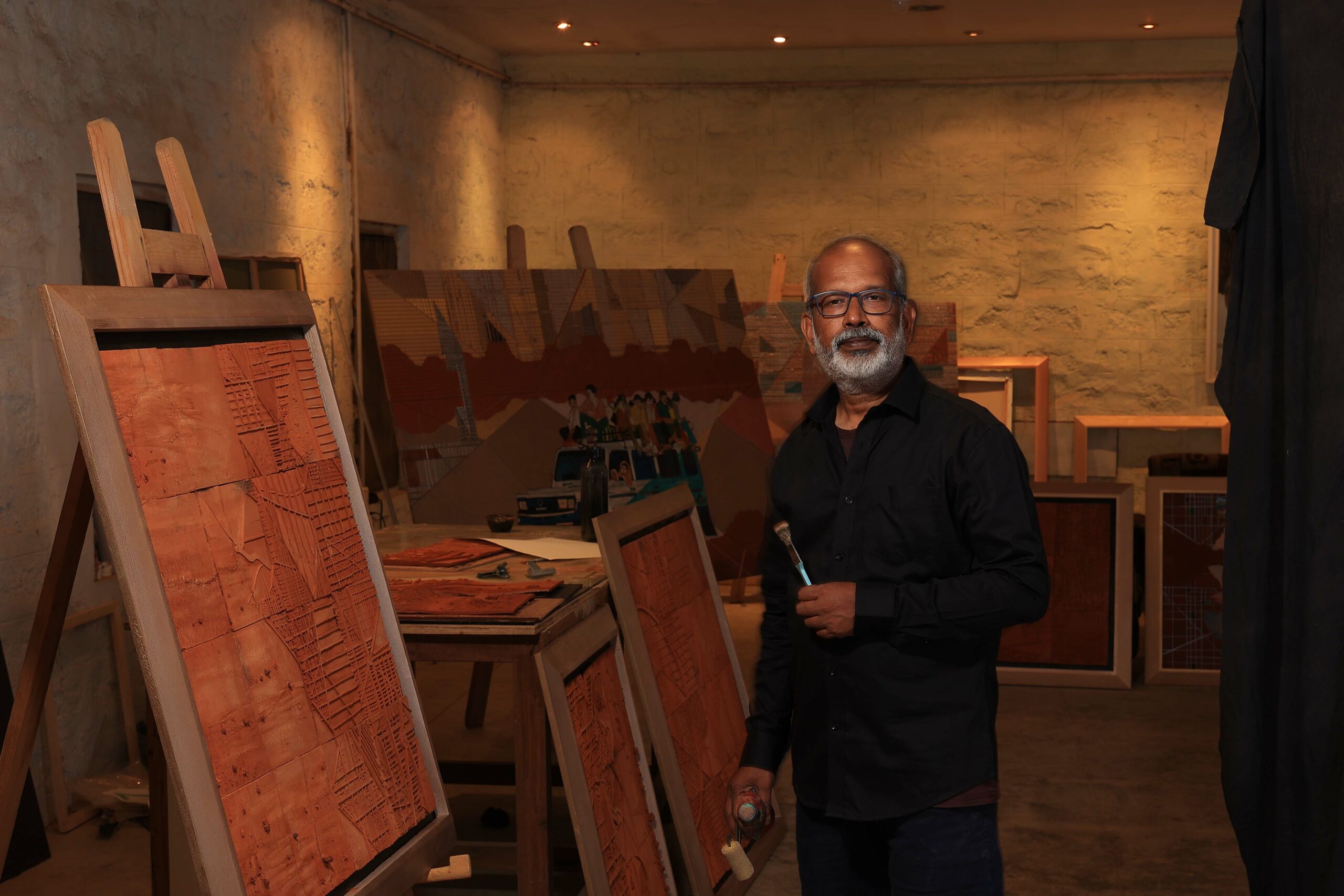
Sudhakar Chippa’s (b.1967) practice explores urbanisation, migration and the transformation of natural landscapes. Drawing from his experiences growing up in a rural environment and witnessing the gradual transformation of village life through expanding urban spaces, he examines the shifting relationship between nature and human development. Working with materials such as soil, wood, terracotta and metal, Chippa creates textured, layered works that reflect on memory, displacement and ecological change. Through material experimentation and an engagement with the physical qualities of his chosen mediums, his work considers the social and environmental consequences of development and the fragility of landscapes in transition.
Chippa was born in India in the 1967 and currently lives and works in Hyderabad. He studied printmaking at M. S. University, Baroda, and Jawaharlal Nehru Architecture and Fine Art University, Hyderabad, where he later taught for over a decade. His practice is informed by his connection to rural life and an ongoing interest in the ways urban expansion reshapes communities, environments and lived experiences. He is also the founder of Banyan Hearts, an artist-led printmaking studio and residency in Hyderabad, which supports artistic exchange and printmaking practices.
Sudhakar Chippa has exhibited widely in India and internationally. His solo exhibitions include presentations at Tao Art Gallery, Mumbai (2026); Srishti Gallery, Hyderabad (2023, 2019); and Gallery Veda, Chennai (2013). His work has also been presented at Strangers House Gallery, curated by TAK Contemporary (2024), Mumbai Art Fair (2024), India Art Fair, New Delhi (2023), and the Affordable Art Fair, London (2020). He has undertaken residencies in London, Florence and China, including Zee Mays Open Studios, Massachusetts, and the Sanbao International Printmaking Exhibition and Symposium in China. A long-standing member of the Royal Society of Painter-Printmakers, London, Chippa has received several awards, including the Bendre Hussain Award (2002), the Hyderabad Art Society Award (1994) and the Bombay Art Society Award (1993).
Mario D’Souza
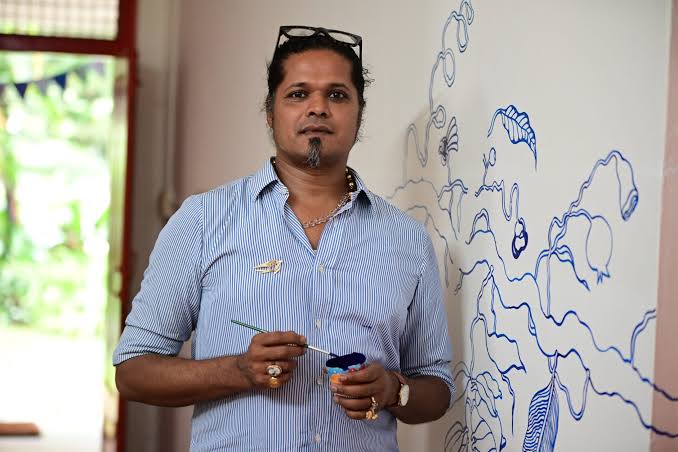
Mario D’Souza (b.1975) is a multidisciplinary artist whose practice explores memory, displacement and the experience of inner exile through immersive installations that bring together everyday objects, drawings and spatial interventions. Working across materials and forms, he creates sensory environments in which personal histories intersect with collective experiences of migration, identity and belonging. By reconfiguring these elements within new spatial contexts, he explores the complexities of belonging, the persistence of cultural memory and the search for a sense of home while living between different places and identities.
D’Souza was born in Bangalore, India, in 1973 and has been living and working in France since 2001. He studied at the MSU Faculty of Fine Arts, Baroda, before pursuing further studies at the École Nationale Supérieure des Beaux-Arts in Paris. His practice has received support from the Institut Français, the Centre National des Arts Plastiques (CNAP), the DRAC (Regional Directorate of Cultural Affairs) and the Regional Council of the Centre Region, France. In 2020, he received a scholarship from the MABA, Fondation des Artistes, in Paris, for his project Indigo as an Identity.
Mario D’Souza has presented solo and group exhibitions in France and India. His recent exhibitions include Forever Young at MAC VAL, Vitry-sur-Seine (2025); a solo exhibition at Centre d’art Auroville, Tamil Nadu (2025); Les 150 ans de l’Impressionnisme at the Musée des Beaux-Arts de Rouen (2024); and a solo exhibition at Kanoria Centre for Arts, Gujarat (2023). Earlier presentations include Sense of Power at Mobilier National, Paris (2018); Nuit Blanche, Paris (2015); and An Exchange with Sol LeWitt at MASS MoCA, North Adams, United States (2011). He has also exhibited at Chapelle Saint-Jacques, Fondation d’entreprise Martell, Château d’Oiron, the Alliance Française in New Delhi, the Triennale de Vendôme, Salon de Montrouge and Espace Fondation EDF in France, as well as Sakshi Gallery, Mumbai.
Pavan Kavitkar
Pavan Kavitkar (b.1990) is a visual artist whose practice explores the relationship between urban and rural spaces, nature and built environments, and the subtle details of everyday life. Drawing from Indian miniature painting, he creates intricate compositions using watercolour, oil and gouache, combining observed reality with imagined landscapes. His works reflect on memory, migration and the psychological effects of social and political structures, inviting viewers to discover intimate narratives within highly detailed scenes.
Kavitkar was born in Amravati, India, in 1990 and currently lives and works in Nashik. He completed his BFA at Sir J. J. School of Art, Mumbai (2014) and his MFA at Visva-Bharati University, Santiniketan (2016). He has also worked as a guest faculty member at the College of Fine Art, Karnataka Chitrakala Parishath, Bangalore.
Pavan Kavitkar’s first solo exhibition, Vocabularies of a Shifting Landscape, was presented at 193 Gallery, Paris (2026). His group exhibitions include Apre Art House, Mumbai (2024); Strangers House Gallery, Mumbai, curated by TAK Contemporary (2024); Gallery Art&Charlie, Mumbai (2024); Taj Palace, New Delhi (2023); and Sakshi Gallery, Mumbai (2021). He has received the Visual Arts Junior Fellowship from the Ministry of Culture, Government of India (2023); the Golden Brush Award from Artild Gallery, Bangalore (2021); the All India Merit Grant from the Prafulla Dahanukar Art Foundation (2021); and the Khoj Support Grant (2020). His scholarships include the Lalit Kala Research Scholarship at the Chennai Regional Centre (2016–17) and the Ila Panda Centre for Arts Scholarship, IPCA, Bhubaneswar.
Darshan Manjare
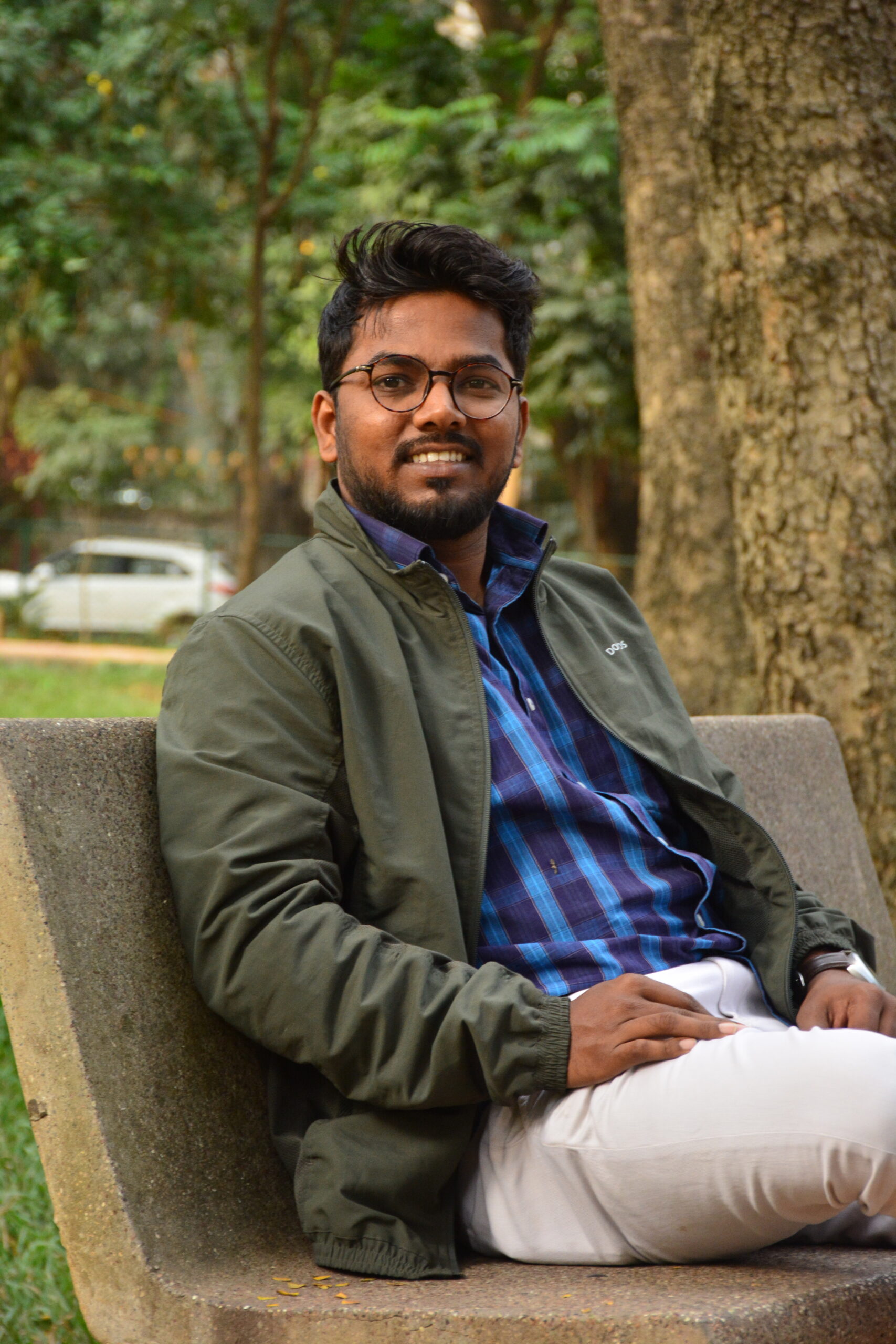
Darshan Manjare (1996) is a multidisciplinary artist whose practice explores rural life, memory and cultural continuity, drawing on his upbringing in a farming community and his enduring connection to the land. Working across painting, sculpture, terracotta and textiles, he brings traditional craft techniques into dialogue with contemporary forms of expression. His work draws from the landscapes, customs and lived experiences of rural India, examining how local knowledge systems, material practices and inherited traditions shape individual and collective identities. Through the reinterpretation of vernacular forms and rural narratives, Manjare reflects on the relationship between people and their environments, considering how cultural knowledge is preserved, transformed and transmitted across generations. His practice creates a dialogue between traditional ways of life and contemporary realities, foregrounding the continued relevance of rural experiences within a changing social and cultural landscape.
Manjare was born in India in 1996 and is currently based in Mumbai. He holds both a BFA and an MFA in Painting from Sir J. J. School of Art, Mumbai. Raised in a farming community, his artistic practice is informed by his personal experiences of rural life and his familiarity with the agricultural landscapes, traditions and material cultures of India.
Darshan Manjare has exhibited in India and internationally. His recent exhibitions include The Shifting of Silence, presented by Blueprint12 and Space118 Art Foundation at Bikaner House, New Delhi (2026); a group exhibition Ceci n’est pas un paysage TAK Contemporary x Catharsis Gallery, Paris (2026); Clean Slate at Jamaat Art Gallery (2024); and Line Laid on a Liminal Land at Strangers House Gallery (2024). Earlier exhibitions include Rivers and Road: Meandering Stories of India at AAIE Center for Contemporary Art, Rome (2023). He has participated in residencies including Arthshila × Khoj, Hissa Art Residency and Apre Art Residency, and has contributed to socially engaged initiatives such as For Every Mother in India in collaboration with the Swiss Embassy. His awards include the Late Shri Ved Anil Abhage Best Painting Award (2022), the Artist Gopal Adivrekar Award (2019) and the Master Deenanath Mangeshkar Award (2018).
Akshata Mokashi
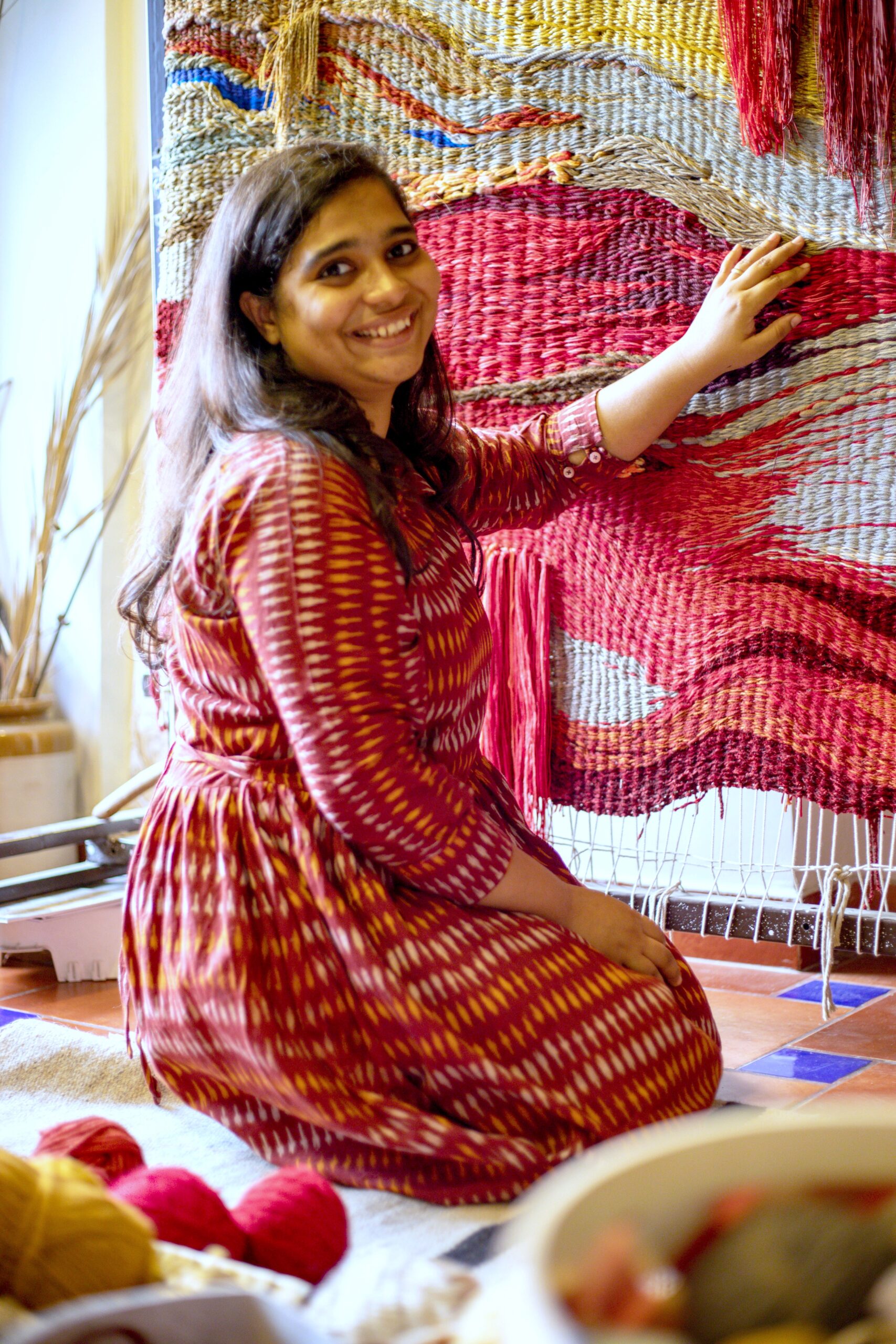
Akshata Mokashi (1994) is a textile artist whose practice explores landscapes, rivers and the changing relationship between nature and urban environments through tapestry weaving. Working with natural fibres, dyes and foraged materials, she creates tactile, layered works that reflect on ecological change, climate concerns and the impact of human intervention on natural landscapes. Her practice brings traditional textile techniques into dialogue with contemporary approaches to materiality, experimenting with unconventional surfaces and the expressive possibilities of weaving. Through the interplay of texture, colour and material, Mokashi examines the ways landscapes are shaped by environmental processes and human activity. Her
works invite a closer consideration of the interconnectedness of natural and built environments, while reflecting on the fragility of ecosystems and the evolving relationship between people and the land. Mokashi was born in India in 1994 and is currently based in Mumbai. She holds a BFA in Textile Design from Sir J. J. School of Art, Mumbai, and an MA in Fashion and Textiles from Heriot-Watt University, Scotland. Her practice is grounded in textile traditions and material experimentation, drawing on natural fibres, dyes and foraged materials to explore the environmental and sensory dimensions of tapestry weaving. She was an artist-in-residence at Space Studio, Vadodara, in 2022.
Akshata Mokashi has exhibited in India and internationally. Her recent exhibitions include Paradise Promised at Bikaner House, New Delhi, presented by the Knowledge Convergence Foundation as part of the India Art Fair Parallel programme (2026); a presentation with Cultivate Art as part of IAF Parallel, Ahmedabad (2026); and a presentation at Chemould CoLab, Mumbai (2025). Earlier exhibitions include the Kate Derum and Irene Davies International Tapestry Award Exhibition, Melbourne (2024); Lines Laid on a Liminal Land (2024); Verukal | േവരുകൾ at David Hall Gallery, Fort Kochi (2024); India Art Fair (2024); and Art Mumbai (2023). Her work has also been exhibited at Jehangir Art Gallery, Mumbai, Dovecot Studios, Edinburgh, and other venues. She received the All India Gold Medal for Tapestry from the Prafulla Dahanukar Art Foundation in 2017 and was a finalist for the Irene Davies Emerging Artist Award in 2024.
Exhibited works
Abirami
Kasalam
2026
Wax, rhinestones, and fabric flowers
100 x 100 x 80 cm
©Abirami; TAK Contemporary, Paris, France; Image: Aurélien Mole
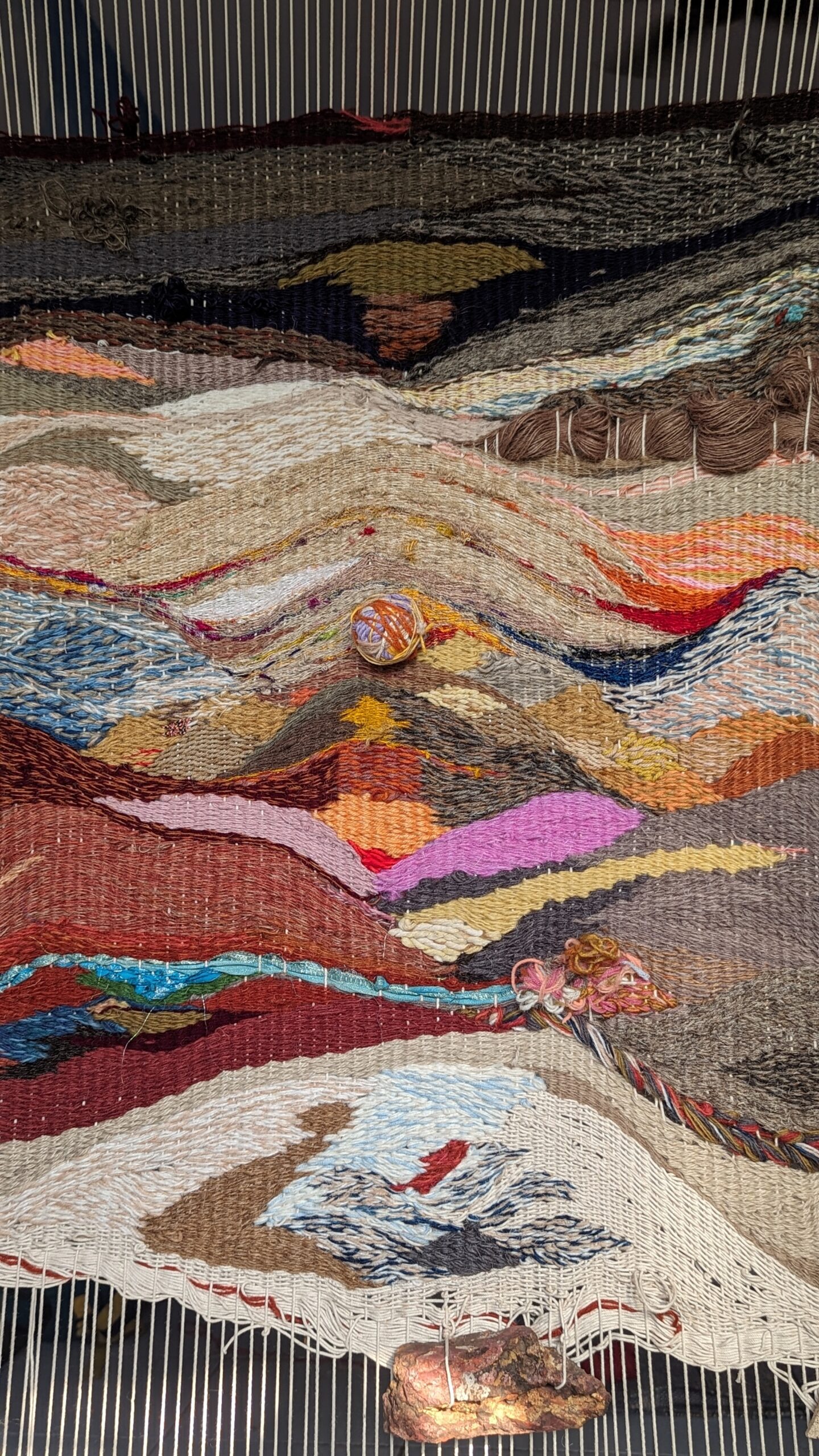
Akshata Mokashi
Mother Goddess
2024
Tapestry woven in natural fibres, sari silk yarn and with stones
187.96 x 63.5 cm
©Akshata Mokashi; TAK Contemporary, Paris, France
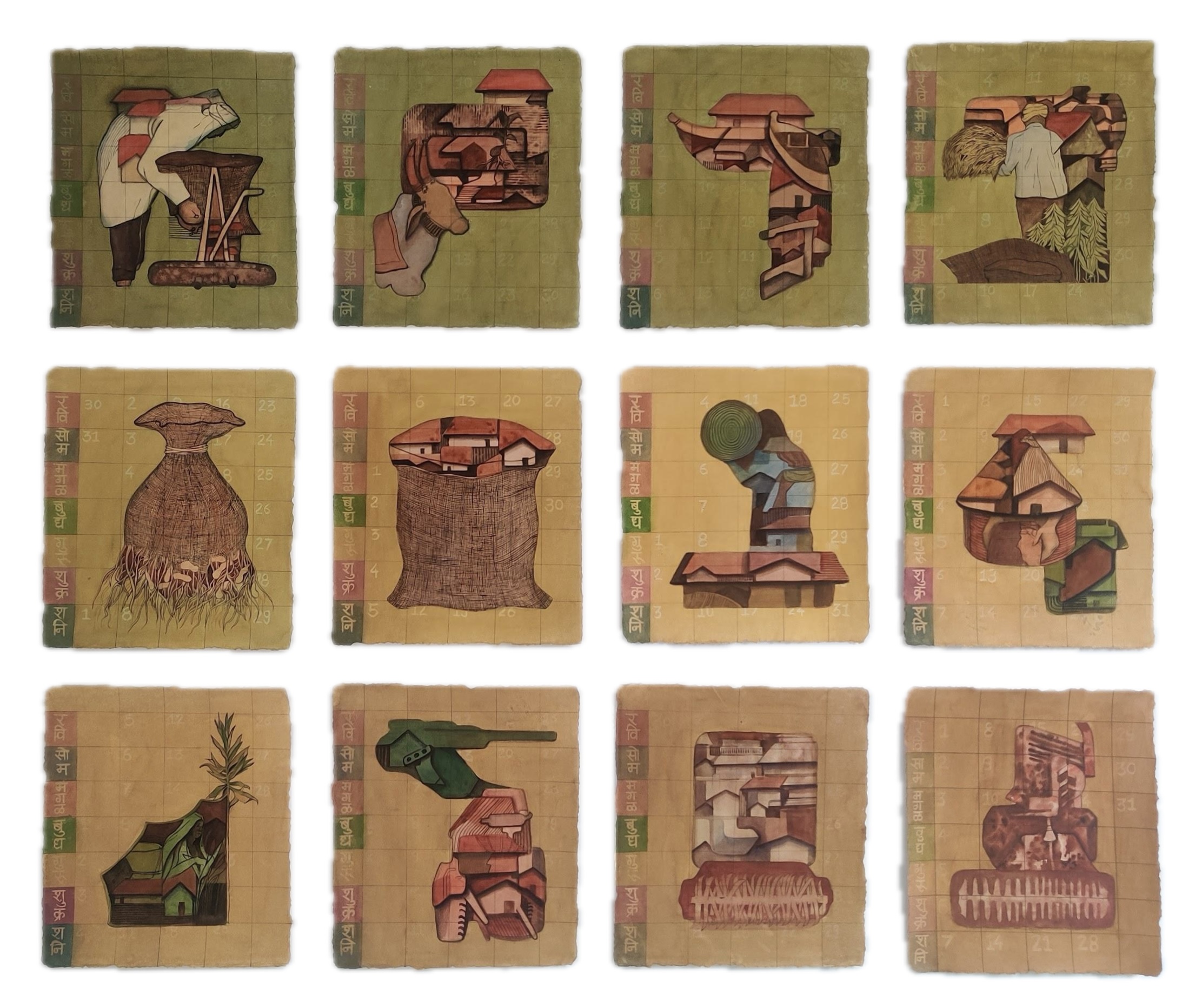
Darshan Manjare
Untitled
2023
Watercolour on paper
40.64 x 35.56 cm (each)
©Darshan Manjare; TAK Contemporary, Paris, France
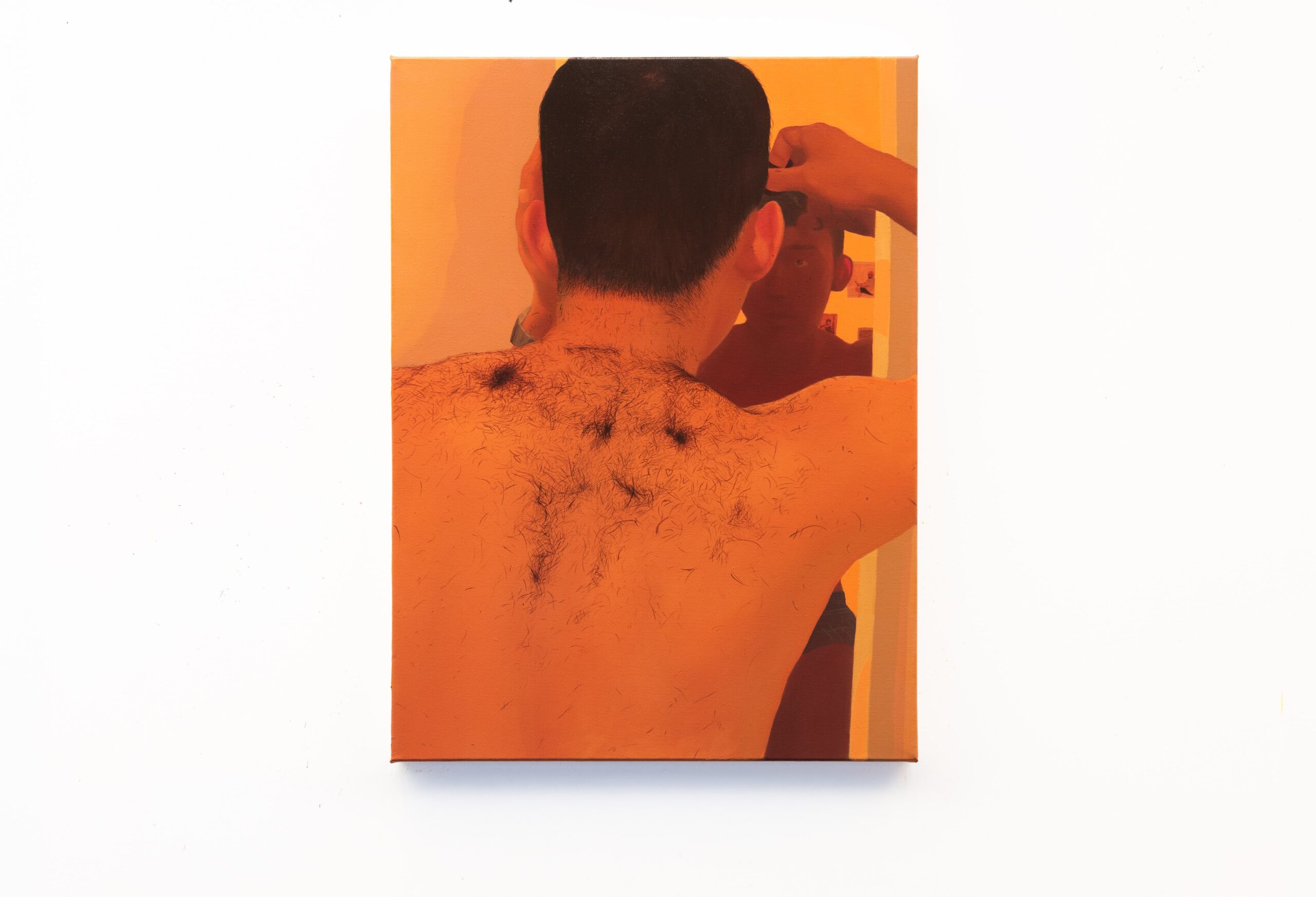
Lakshya Bhargava
Simon’s cut
2026
Acrylic on canvas
76.2 x 61 cm
©Lakshya Bhargava; TAK Contemporary, Paris, France; Gallery Sumukha, Bangalore, India
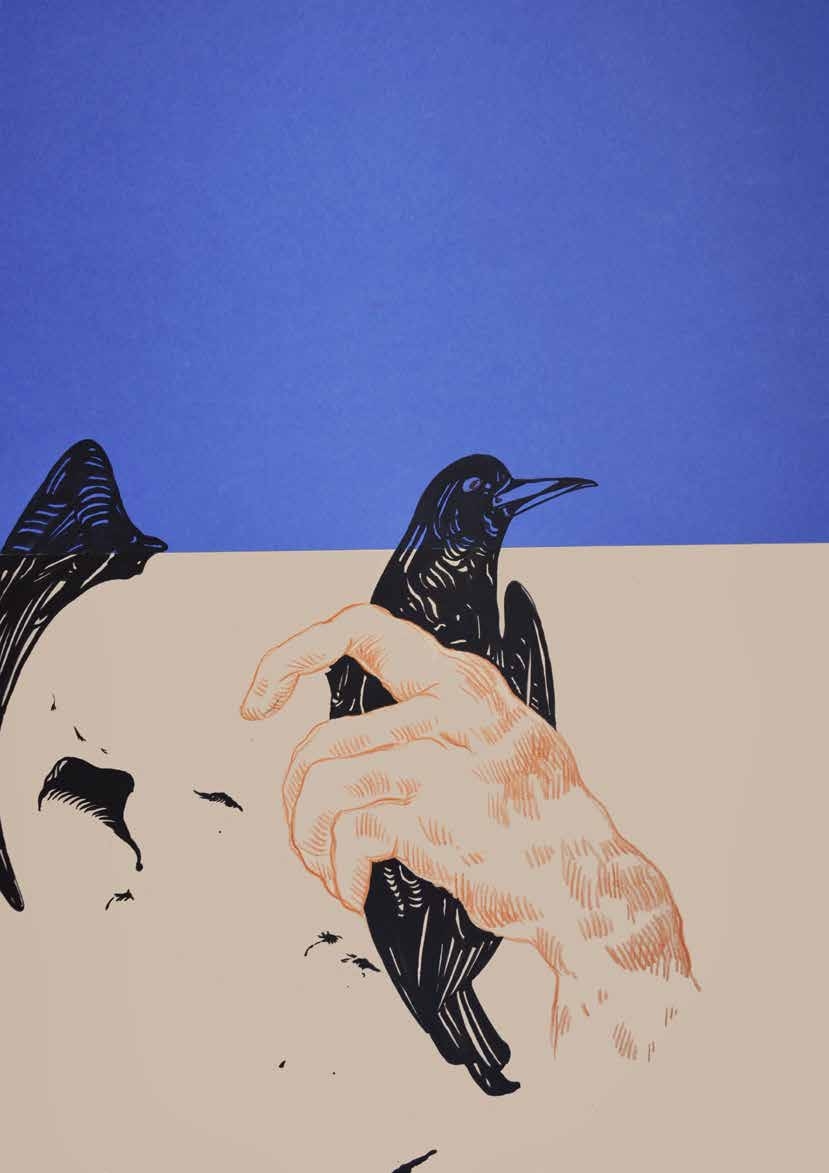
Mario D’Souza
In the following pages
2020
Coloured paper, Indian ink and water coloured pencils
23 x 16 cm
©Mario D’Souza; TAK Contemporary, Paris, France
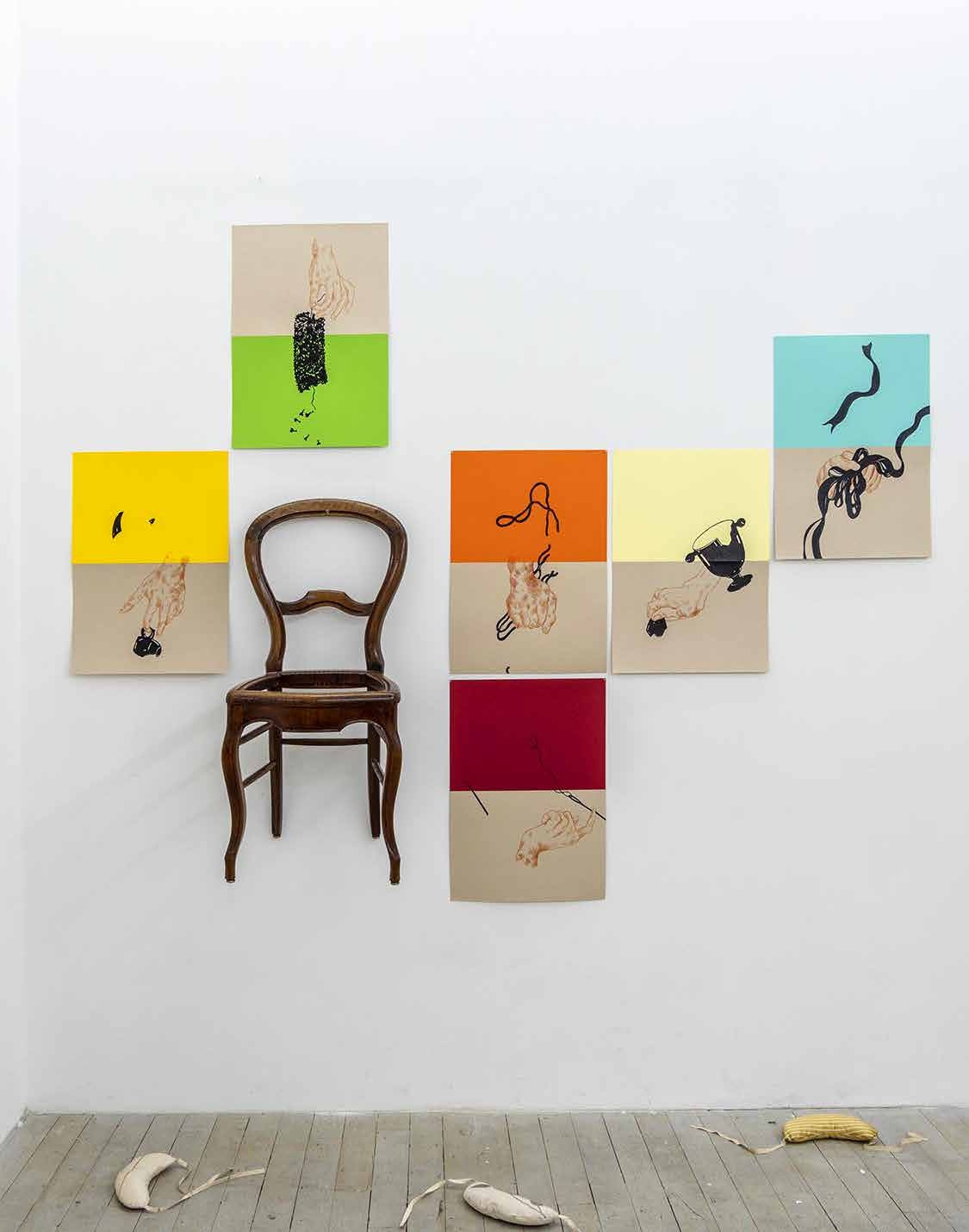
Mario D’Souza
Untitled
2020
Coloured paper, Indian ink and water coloured pencils, objects made of fabrics and woods.
Variable in dimension
©Mario D’Souza; TAK Contemporary, Paris, France
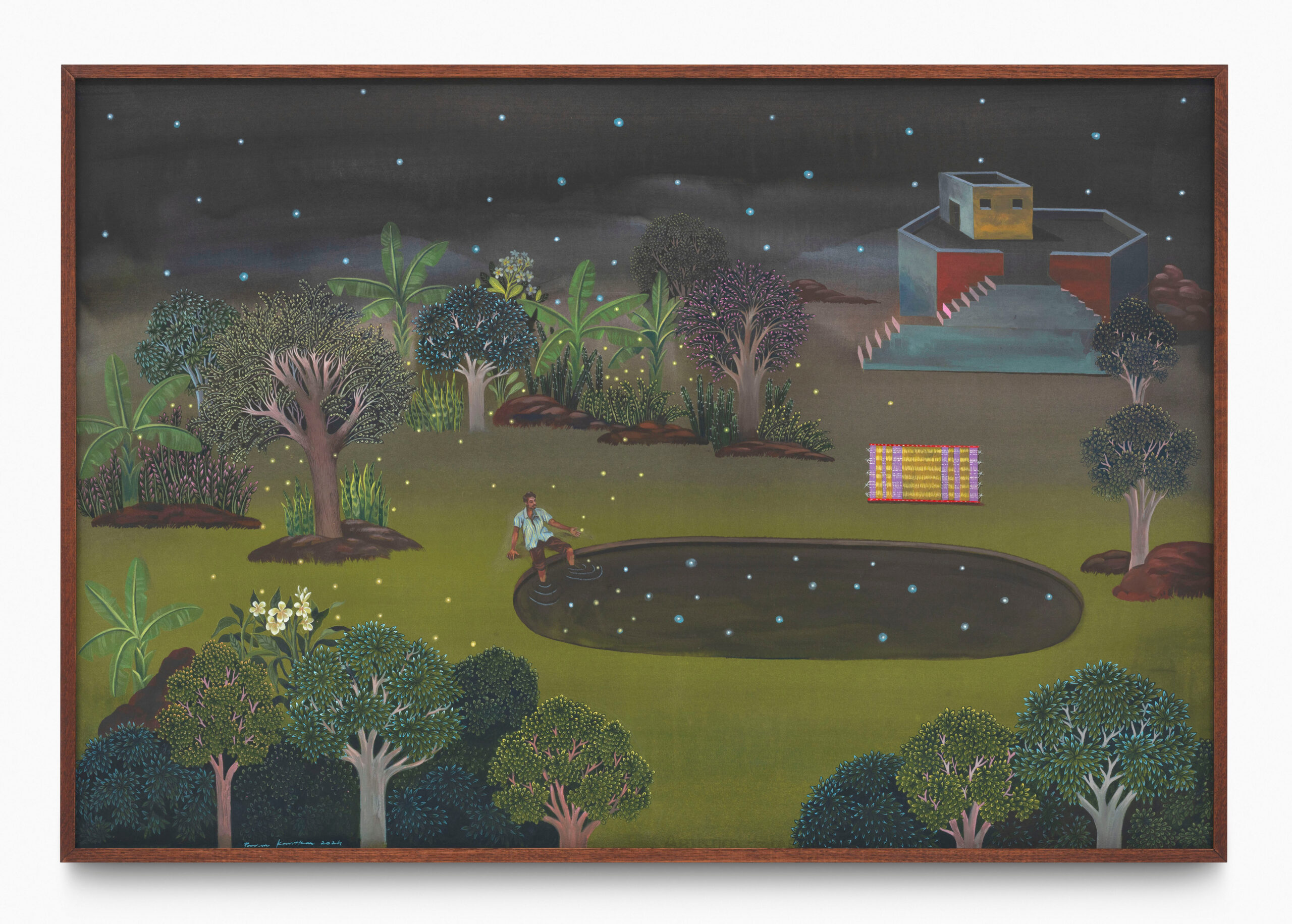
Pavan Kavitkar
Starry Nights
2026
Watercolor and gouache on paper
76 x 111 cm
©Pavan Kavitkar; TAK Contemporary, Paris, France; Image: Nicolas Brasseur
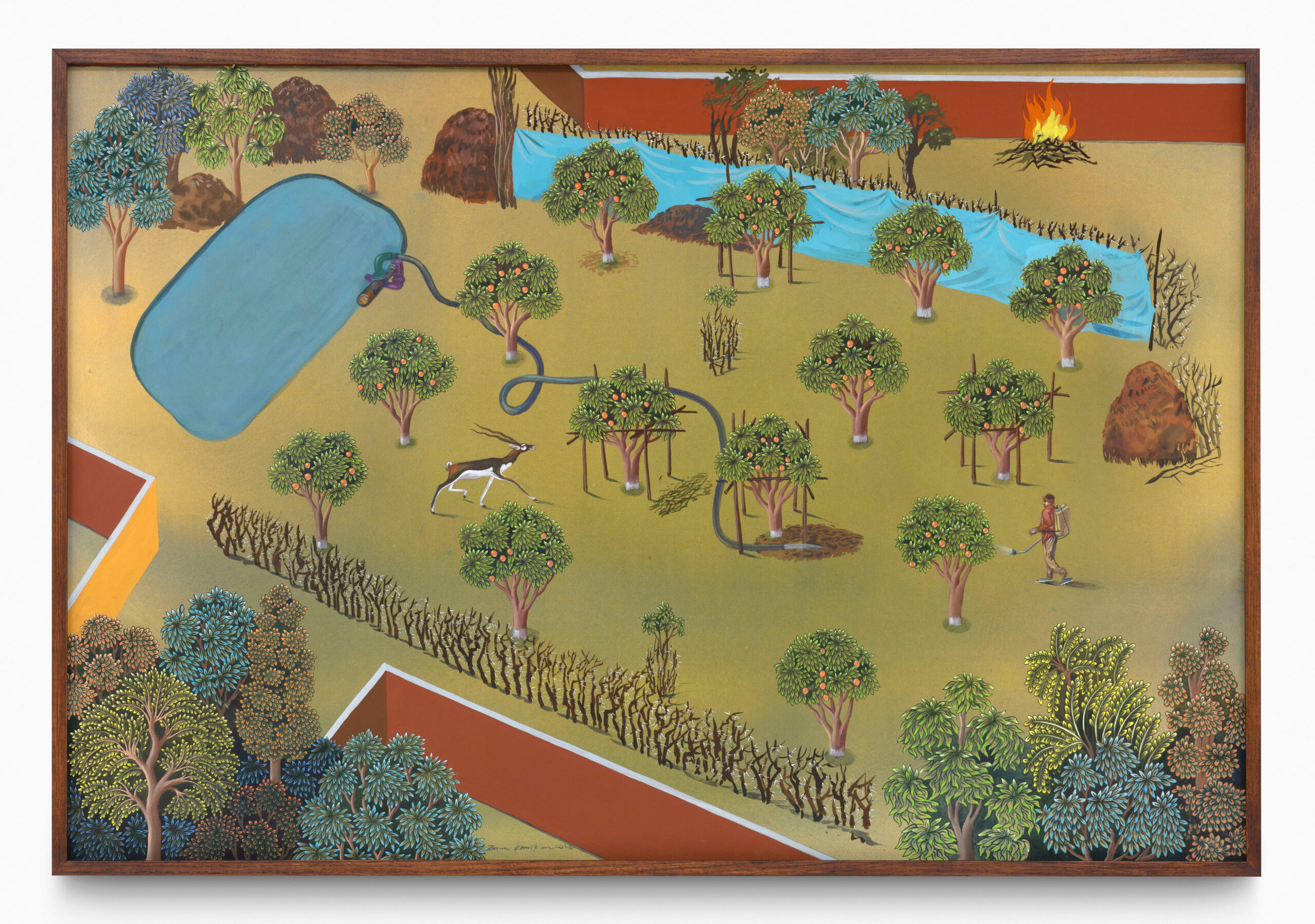
Pavan Kavitkar
Untitled (Irrigation of Orange farm)
2026
Watercolor and gouache on paper
76 x 111 cm
©Pavan Kavitkar; TAK Contemporary, Paris, France; Image: Nicolas Brasseur

Sudhakar Chippa
Changing Terrains 1
2025
Mixed media on wood
64 × 125 cm
©Sudhakar Chippa; TAK Contemporary, Paris, France