



Third Space
Danfe Arts
As part of The Third Space, Danfe Arts bring a large scale textile installation by Priyanka Singh Maharjan, whose work comes from the series To All The Women Who Came Before Me and invites its viewers to notice women’s work against the changing backdrop of the city the artist grew up in. It is an homage to the creative labour of women and the intergenerational exchanges that have enabled their life-giving womanly preoccupations.
Info
Putalisadak, Kathmandu
http://www.danfearts.com
For inquiries:
Shivangi Bansal
danfearts@gmail.com
+977 9857023485
Exhibited artists
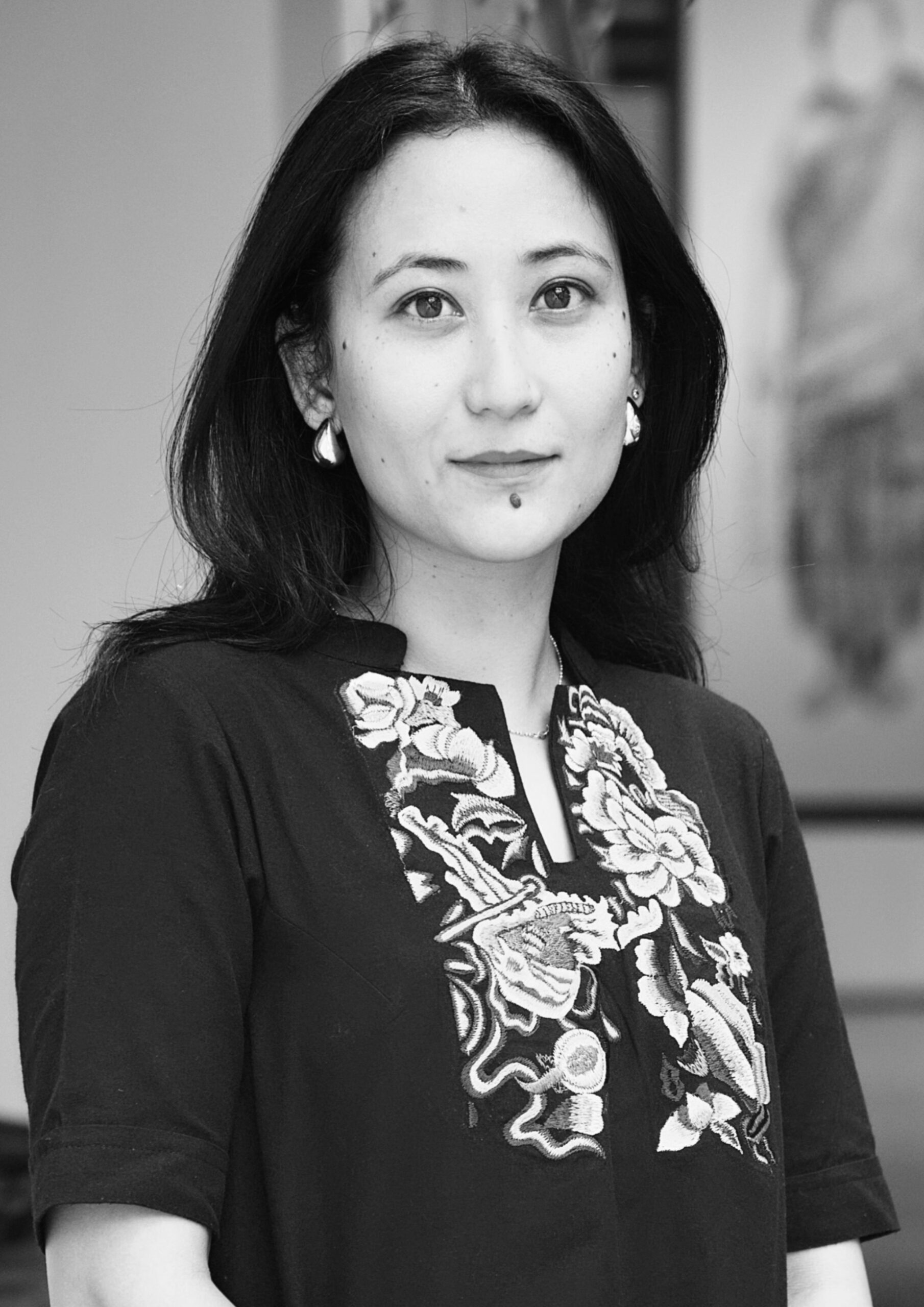
Priyanka Singh Maharjan
Lives and works in Lalitpur
Priyanka Singh Maharjan is a Lalitpur-based visual artist and illustrator whose practice focuses on memory, personal history, and the reinterpretation of the past, with an emphasis on women’s experiences. Working with photography, embroidery, and pen work, she creates intricate pieces that translate intimate narratives into visual form, engaging themes of time, memory, and identity. She is also an artist-educator with Srijanalaya, a non-profit promoting alternative art education in Nepal.
Exhibited works
To All The Women Who Came Before Me
How do our mothers and grandmothers spend their lives?
In To All The Women Who Came Before Me, Priyanka Singh Maharjan is noticing the time and efforts of the women around her. The ceaseless cycle of chores at home and fields, and the numerous side-hustles that follow them even during their leisure keep women busy. Their quiet labours, as indispensable as they are for life to go on in society, either go unacknowledged and uncelebrated, or are glorified and exotified. Either way, they continue working relentlessly.
As an ode to the busy, productive hands of women, Maharjan is using “women’s works” – embroidery, crochet, weaving – to explore the work of women before her and around her. Her mother looked after the house, raised two children, wove carpets and wrote loving letters, all while her father was abroad for work. Her grandmothers tended fields, raised children, took
care of the house and wove warm shawls. Her great-grandmother even taught children to read. The women around her continue to do these works, even as they step into newer, more modern roles. These details, she knows, because she has been talking to them.
Maharjan’s conversations with the women in her life – her mother, aunts, grandmothers, sisters and friends from her community – all feed the visuals of her work. To embroider, other than the literal act of sewing patterns onto fabric, also means to add exaggerated details to stories to make them more interesting. To embroider means to gossip or to loiter over “less important” details. These details – women going about their day, the objects their hands touch, the spaces they occupy, the tattoo patterns on their bodies, the food they grow – are embroidered lovingly onto fabric woven by her grandmother. Women from her community have chosen to collaborate with her. They embroider. They talk. They embroider. Processes – the movement of women’s hands and hearts – are central to this body of work.
Maharjan comes from a line of women who have worked the fields and the loom. They pick up these skills out of necessity, curiosity, or a simple need to keep their hands busy. Their idea of rest, or rather leisure or a break, is to weave. Her own mother wove carpets, not the traditional shawls of her grandmothers’ and aunts’. Here, Marharjan is also learning, exploring and intervening, and making sense of her own weaving process.
To All The Women Who Came Before Me is an invitation to notice women’s work against the changing backdrop of the city Priyanka Singh Maharjan grew up in. It is an homage to their creative labours and the intergenerational exchanges that have enabled their life-giving womanly preoccupations.
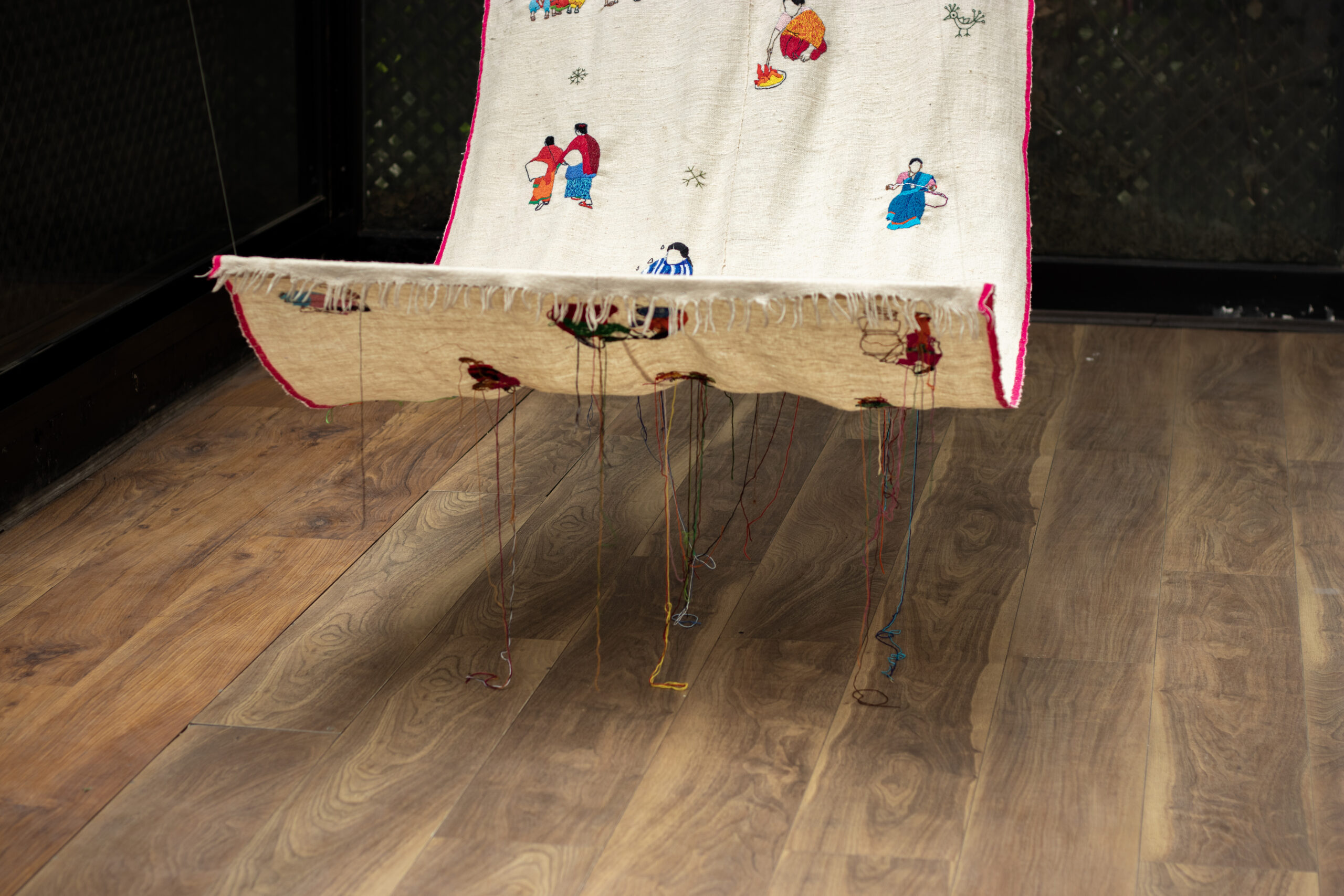
Priyanka Singh Maharjan
To All The Women Who Came Before Me
2025
Embroidery on Heirloom Fabric
11 000 € without taxes
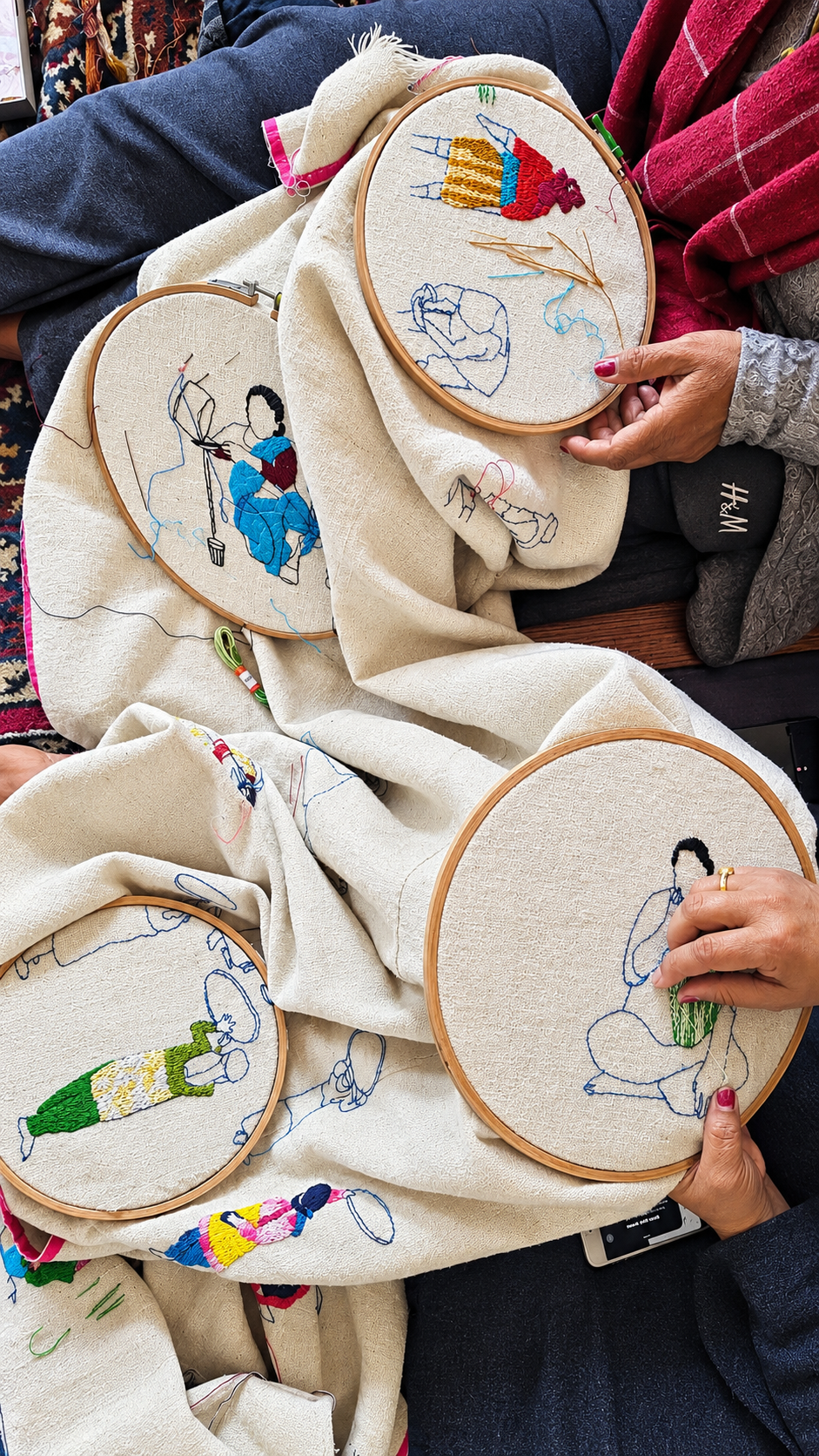
Priyanka Singh Maharjan
To All The Women Who Came Before Me
2025
Embroidery on Heirloom Fabric
11 000 € without taxes
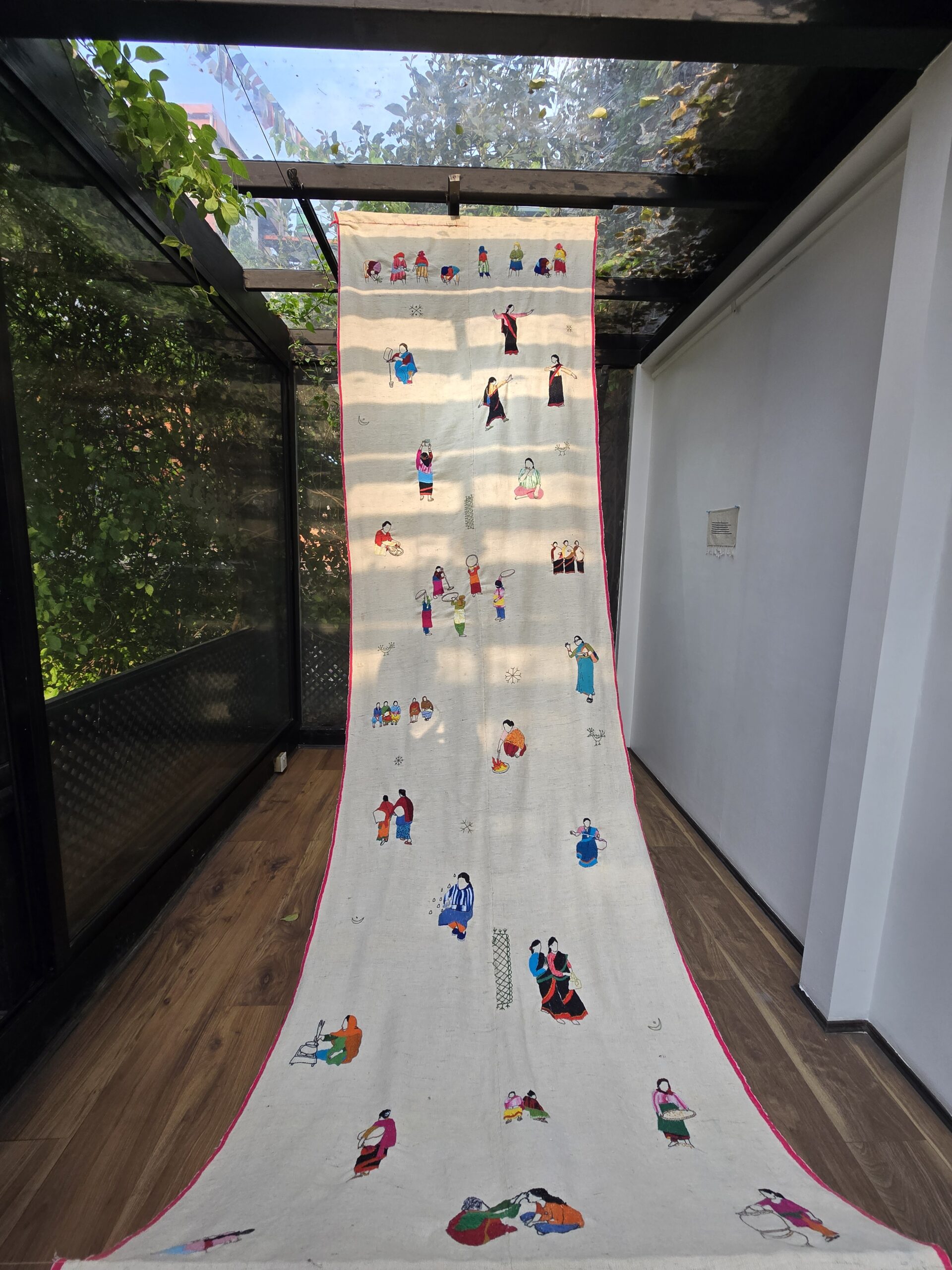
Priyanka Singh Maharjan
To All The Women Who Came Before Me
2025
Embroidery on Heirloom Fabric
11 000 € without taxes
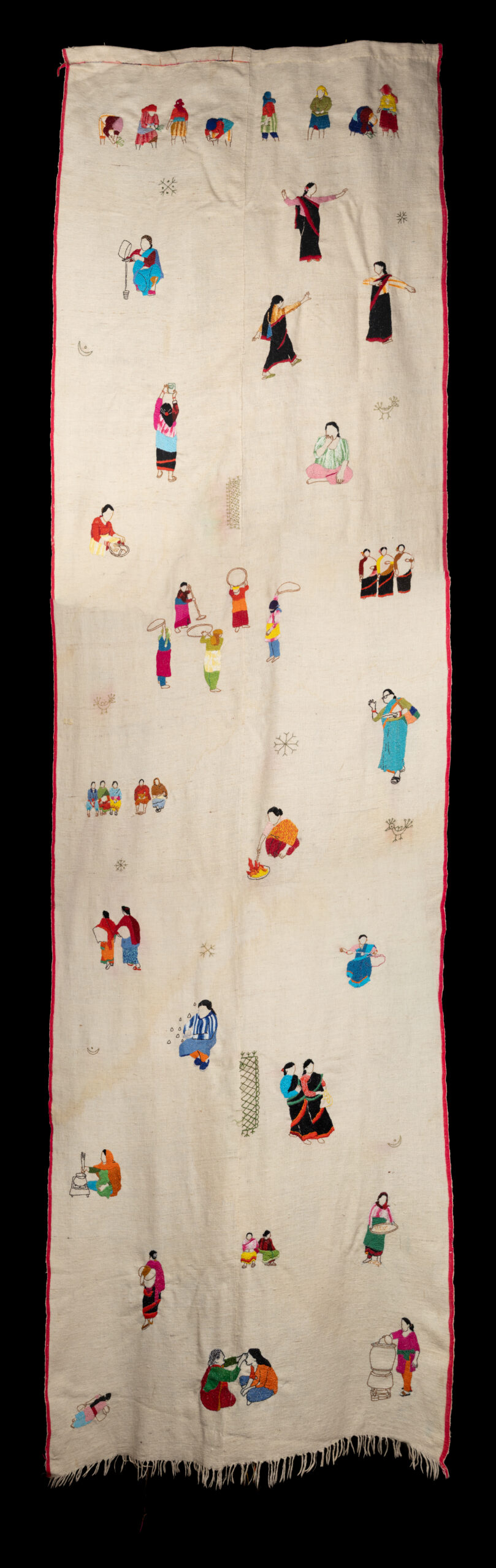
Priyanka Singh Maharjan
To All The Women Who Came Before Me
2025
Embroidery on Heirloom Fabric
11 000 € without taxes