




Special Projects
Sentimental Value
In its 12th edition, Asia NOW explores the concept of ‘Sentimental Value’, examining how artworks, objects and materials acquire value through the lives they touch.
A gesture is passed on. A material retains traces of its use. An object that is carried elsewhere becomes a repository of family history, a place or an absence. This reveals an ecology of attachment, shaping another economy of value through memory, labour, care and relationships. ‘Sentimental value’ encapsulates this network of connections: the bonds that link forms to individuals, environments, and the histories from which they originate.
This reflection considers soil as a material, a territory and an archive. As a site of cultivation and extraction, sustenance and dispossession, the soil bears the marks of what has been planted, taken or displaced. Moving from soil to surface, skin and second skin, the works explore the migration of people alongside the circulation of resources and knowledge, colonial legacies, and opportunities for regeneration. The intimate provides an entry point to collective narratives.
This inquiry extends to participatory practices, gestures of hospitality, and rituals of gathering across Asia and throughout the Asia NOW programme. These are encounters in which value also emerges through what is experienced, cultivated, and shared.
Ce Que La Matière Garde
Kazunori Hamana & Marie Hazard
Curated by 91530 Le Marais
Ce Que La Matière Garde brings together Japanese ceramicist Kazunori Hamana and French textile artist Marie Hazard for the first time in the peristyle courtyard of the Monnaie de Paris. The exhibition creates a dialogue between two vernacular traditions and two geographies: Japanese ceramics, rooted in the lineage of prehistoric tsubo jars, and weaving, which Marie Hazard pushes far beyond its conventional boundaries. Both artists share the same ethic toward raw material—one marked by neither neutrality nor dominance: the medium resists, suggests, and deviates, and the artist follows.
Their practices share a dedication to slow rhythms, repeated gestures, and surfaces that bear the mark of both time and the physical body. For both, process precedes object: the act of making is itself the form. In a world driven by speed and mass reproducibility, they raise the same fundamental question: at what point does an object begin to carry the trace of what brought it into being?
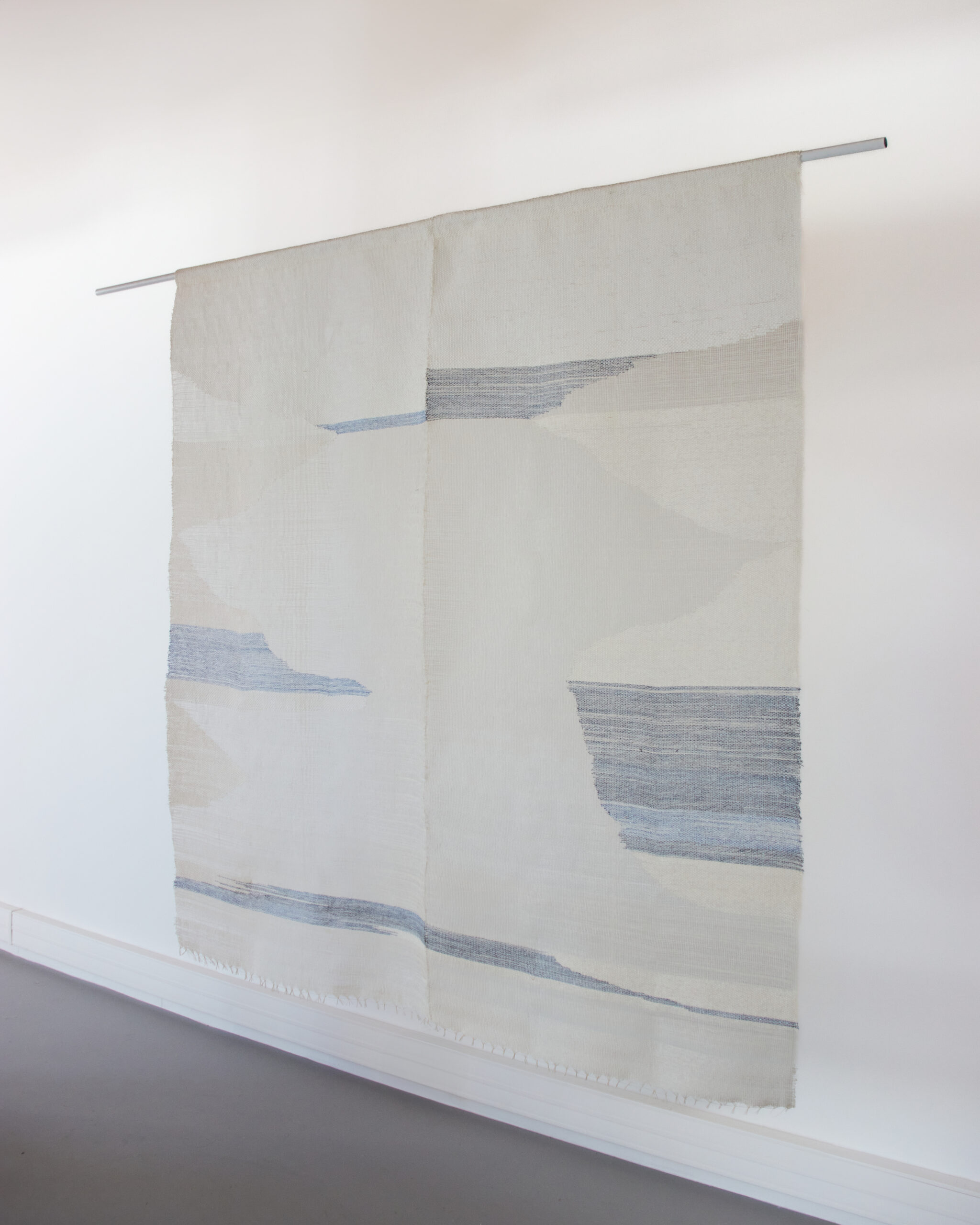
Here, surface becomes skin. The skin of Hamana’s jars bears scratches and engravings, as though the clay retained a lingering memory of a prior presence. The surface of Hazard’s weavings is not a closed membrane, but a permeable threshold that visitors approach, brush against, and step through. The weave does not enclose; it connects.
The works are scaled to the human body—they are not merely looked at, but encountered. The object ceases to be an end in itself; matter becomes context, and the space itself turns habitable, navigable, and deeply sensible.
Neither Hamana nor Hazard are craftsmen in the heritage sense. Both disrupt, question, and reinvent their traditions, guided by a shared devotion to what raw material can still teach us. Ultimately, the exhibition speaks to transmission: not of codified know-how, but of an unspoken memory embedded within the substance of things.
Kazunori Hamana
Born in 1969, Kazunori Hamana lives and works in Isumi, along the Pacific coast of Chiba Prefecture. A self-taught ceramicist, he learned by doing—balancing his time between fishing and the kiln. Built up using coil techniques from natural clays sourced in Shiga Prefecture, his large-scale jars are incised and then left outdoors to age in the elements. They possess the haunting presence of hollowed sea shells or objects weathered by the ocean, carrying on their skin the memory of earth, water, and time spent under the open sky.
Marie Hazard
A textile design graduate of Central Saint Martins in London, Marie Hazard embraces a deliberately “non-craft” practice: “Textiles are not a craft; textiles are the matrix.” The two works presented in the peristyle courtyard are woven from hemp, linen, and paper. A portion of the linen comes from leftover stock from a now-closed textile factory in northern France, gifted to her by a collector: once pressed, the threads retain the trace of their origin while taking on an entirely new function and scale. Lightweight and porous, these body-scaled textile landscapes demonstrate how a traditionally flat medium can become structure, threshold, and architecture.
Marie Hazard
Louis Le Kim
Louis Le Kim, Untitled, 200×300, 2024
Courtesy of Louis Le Kim and ARTUNER
Louis Le Kim
Presented by Artuner
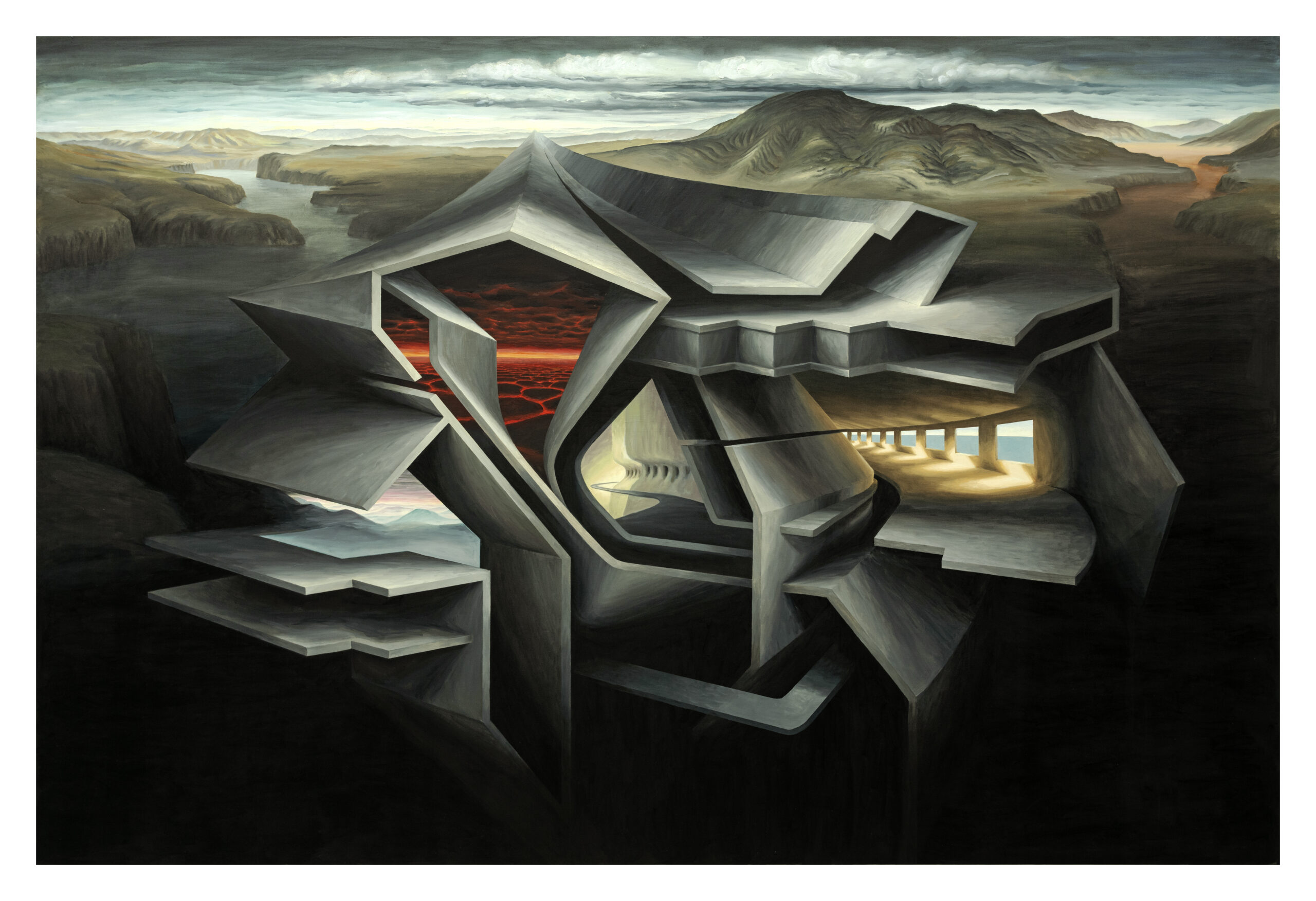
Louis Le Kim’s practice explores the intersections of space, memory, and architecture, drawing on his experiences of hidden urban environments and remote historical sites across the world to create enigmatic landscapes that oscillate between reality, dream, and speculation. Presented by Artuner, the exhibition will bring together a site-specific body of work conceived in dialogue with the space, featuring a new series of paintings created specifically for the exhibition.
About Artuner
Founded by Eugenio Re Rebaudengo in 2013, ARTUNER mounts curated exhibitions of contemporary art. ARTUNER has distinguished itself through its hybrid approach, exhibiting works both online and via pop-up shows throughout Europe. ARTUNER provides guidance and expertise for collectors through educational contents on the site and a rigorous approach towards the selection of artists and projects. It offers a curated selection of artworks for sale.
Coming Soon